The Hitchhikers Guide to Full-Field Laser Vibrometry
Overview
Full‑field laser vibrometry is a non‑contact optical measurement technique that captures vibration, deformation, and mode shapes across an entire surface simultaneously. Unlike scanning vibrometers, which measure one point at a time, full‑field systems acquire complete spatial information in real time — enabling rapid, high‑resolution analysis of mechanical structures, composites, and micro‑devices.
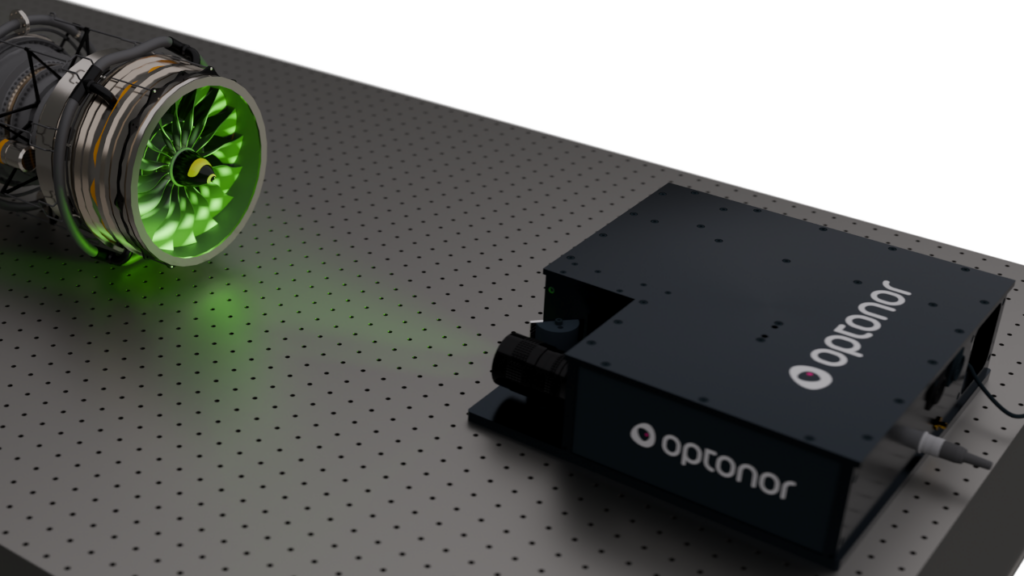
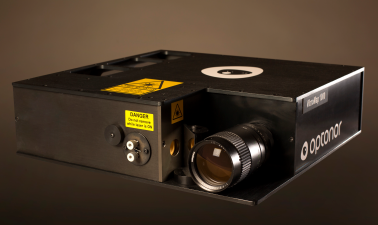
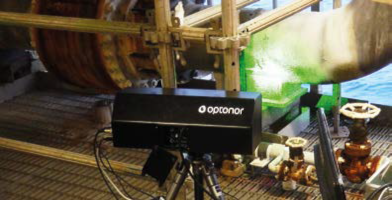
This guide explains the principles, instrumentation, applications, and advantages of full‑field vibrometry, with a focus on interferometric imaging systems such as Optonor’s VibroMap.
What Is Full‑Field Laser Vibrometry?
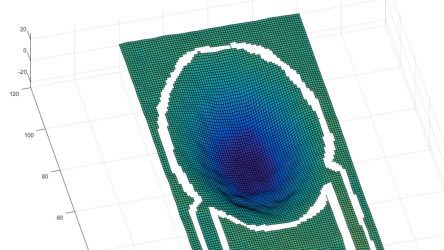
Full‑field vibrometry measures the out‑of‑plane vibration of a surface by recording optical phase changes across a camera sensor. Each pixel acts as an independent interferometric detector, producing a dense vibration map.
Key characteristics:
Non‑contact
Real‑time measurement
High spatial resolution
High‑frequency capability
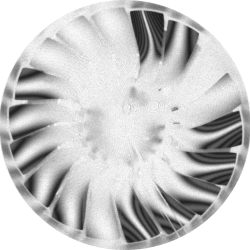
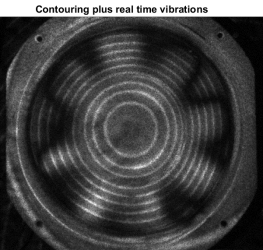
Full‑surface mode shape visualization
This makes it ideal for structures where scanning is too slow, too coarse, or physically impractical.
How It Works (Measurement Principle)
Full‑field vibrometry is based on interferometry, where a coherent laser beam is split into a reference beam and an object beam. When the object vibrates, the reflected light experiences a phase shift proportional to displacement.
Measurement workflow:
Illumination
A laser illuminates the surface.
Interference formation
Reflected light interferes with a reference beam, creating a phase‑encoded pattern.
Imaging
A high‑resolution camera captures the interference pattern.
Phase extraction
Algorithms compute phase changes for each pixel.
Vibration reconstruction
Displacement, velocity, and mode shapes are derived from the phase data.
Why this matters:
Because every pixel measures simultaneously, the system captures complete mode shapes in a single acquisition, even at high frequencies.
Full‑Field vs Scanning Vibrometry
Feature
Full‑Field Vibrometry
Laser-Doppler Vibrometry
Measurement speed
Real‑time
Slow (point‑by‑point)
Spatial resolution
High (camera‑limited)
Moderate
Frequency range
DC to high‑MHz
Typically kHz–MHz
Mode shape capture
Instant
Requires full scan
Sensitivity to motion
Low
High
Best for
Composites, MEMS, complex geometries
Simple structures
Full‑field vibrometry is the superior method when:
The structure has many modes
The geometry is complex
The object cannot remain perfectly still
High‑frequency behavior is important
Time‑to‑result matters
System Components
A typical full‑field vibrometry system includes:
Laser source
Coherent illumination
Wavelength stability
Suitable power for diffuse or specular surfaces
Interferometric optics
Beam splitters
Reference arm
Imaging optics
High‑speed camera
High dynamic range
High frame rate
Low noise
Object excitation
Piezo actuators
Shakers
Acoustic excitation
Thermal load
Vacuum load
Processing software
Phase extraction
Frequency analysis
Mode shape visualization
Export and reporting tools
What Full Field Vibrometry Measures
1. Displacement
Absolute or relative out‑of‑plane motion.
2. Velocity
Derived from phase rate of change.
3. Mode shapes
Spatial vibration patterns across the surface.
4. Resonance frequencies
Natural frequencies of the structure.
5. Damping characteristics
Energy loss per cycle.
6. Defects and anomalies
Changes in stiffness or mass distribution.
Advantages of Full Field Vibrometry
1. Real‑time mode shapes
Instant visualization without scanning.
2. High spatial resolution
Limited only by camera pixel count.
Ultra-high‑frequency capability
Suitable for MEMS and micro‑devices.
4. Non‑contact and non‑destructive
No mass loading or mechanical interference.
5. Robust to environmental motion
No need for perfect isolation.
6. Fast measurement cycles
Ideal for production, QA, and iterative R&D.
Applications
Aerospace and Composites
Delamination detection
Impact damage assessment
Quality control of composite panels
Modal analysis of lightweight structures
Mechanical Components
Resonance identification
Structural optimization
Fatigue analysis
Noise and vibration troubleshooting
MEMS and Microstructures
Mode shape visualization
Packaging effects
High‑frequency behavior
Device characterization
R&D and Material Science
Experimental modal analysis
Validation of simulation models
Material property studies
Non-Destructive Testing
Delamination detection
Impact damage assessment
Quality control of composite panels
Modal analysis of lightweight structures
Typical Workflow - Deterministic and Repeatable
1. Mount the object 2. Illuminate with laser 3. Adjust focus and reference beam 4. Apply excitation 5. Acquire interferometric images 6. Extract phase and compute vibration data 7. Visualize mode shapes 8. Export results
Example Use cases
Composite Panel with Impact Damage
Full‑field vibrometry reveals local stiffness changes as distortions in mode shapes.
MEMS Resonator
High‑frequency mode shapes captured in real time for design validation.
Automotive Component
Identification of unwanted resonances contributing to noise or vibration.
Why Full Field Vibrometry Matters
As structures become lighter, more complex, and more integrated, traditional point‑based measurement methods struggle to keep up. Full‑field vibrometry provides the spatial and temporal resolution needed to understand modern materials and devices.
It is rapidly becoming a preferred method for composite inspection, MEMS characterization, lightweight structural analysis and high‑frequency vibration research.