
Next-Generation Shearography
Overview
Composite materials are widely used in aerospace, wind energy, automotive, and advanced manufacturing because of their high stiffness‑to‑weight ratio. But they are also vulnerable to hidden defects such as delamination, impact damage, and internal stiffness variations that are difficult to detect using conventional inspection methods.
Full‑field laser vibrometry provides a non‑contact, high‑resolution, real‑time method for identifying structural anomalies in composite materials. By analyzing vibration mode shapes, engineers can detect defects that would otherwise remain invisible.
This guide explains how full‑field vibrometry works for composite inspection, why it outperforms traditional NDT methods, and how it is used in real‑world applications.
Why Composite Defects Matter
- Delamination between layers
- Impact damage from tools, debris, or bird strikes
- Matrix cracking
- Fiber breakage
- Stiffness variations from manufacturing inconsistencies
Many of these defects are subsurface and non‑obvious, yet they significantly reduce structural integrity. Traditional inspection methods (ultrasound, tap testing, thermography) often struggle with:
- Complex geometries
- Large surface areas
- Low‑contrast defects
- Time‑consuming scanning
- Operator‑dependent results
Full‑field vibrometry solves these limitations.
Full Field Laser Vibrometry Finds Composite Defects
The process:
- The composite panel is excited (acoustically, mechanically, or via a shaker).
- A laser illuminates the surface.
- Interferometric imaging captures vibration across the entire surface.
- Mode shapes are reconstructed in real time.
- Defects appear as localized anomalies in the vibration field.
Defects change:
- Local resonance frequencies
- Mode shape curvature
- Amplitude distribution
- Phase continuity
These changes are easy to see in full‑field mode shapes, even when the defect is invisible to the naked eye.
Advantages Over Traditional NDT Methods
Method | Limitations | Full‑Field Vibrometry Advantage |
Ultrasound | Requires contact, coupling gel, slow scanning | Non‑contact, full‑field, fast |
Thermography | Sensitive to surface emissivity, heating required | Works at room temperature |
Tap testing | Operator‑dependent, low resolution | High‑resolution, objective |
X‑ray | Expensive, safety concerns | Safe, simple, portable |
Shearography | Good for some defects, limited frequency range | High‑frequency capability, richer data |
Full‑field vibrometry provides higher resolution, faster acquisition, and more interpretable results than most NDT techniques.
Types of Defects Detectable with Vibrometry
- Delamination
- Appears as local softening
- Causes mode shape discontinuities
- Easily visible in low‑frequency modes
- Impact Damage
- Even low‑energy impacts create internal damage
- Vibrometry reveals stiffness loss before visual signs appear
- Manufacturing Defects
- Resin‑rich or resin‑poor areas
- Fiber misalignment
- Voids
- Fatigue Damage
- Progressive stiffness changes
- Mode shape evolution over time
- Bonding Defects
- Adhesive failures
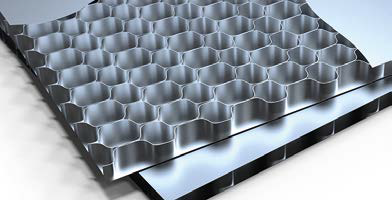
- Skin‑to‑core separation in sandwich structures
Applications
Aerospace
- Aircraft fuselage panels
- Control surfaces
- Composite fairings
- UAV structures
Wind Energy
- Blade inspection
- Leading‑edge damage detection
- Manufacturing QA
Automotive
- Carbon fiber components
- Crash structures
- Lightweight panels
Industrial Manufacturing
- Composite tanks
- Pressure vessels
- Structural panels
Example Outputs
Mode Shape Distortion
A delaminated region appears as a localized amplitude increase or phase shift.
Frequency Shift
Defective areas alter local resonance frequencies.
Curvature Analysis
Second‑derivative curvature highlights stiffness anomalies.
Comparative Analysis
Healthy vs damaged mode shapes show clear differences.
Measurement Workflow
- Mount the composite panel
- Illuminate with laser
- Apply excitation (acoustic, mechanical, shaker, thermal, vacuum)
- Acquire interferometric images
- Extract phase and compute mode shapes
- Identify anomalies in the vibration field
- Export results for reporting or simulation validation
The workflow is fast, repeatable, and suitable for both R&D and production environments.
Why Full Field Vibrometry Is Ideal for Composites
- Non‑contact — no surface preparation needed
- Full‑field — entire panel measured at once
- High resolution — pixel‑level detail
- Real‑time — instant mode shape visualization
- High‑frequency capability — sensitive to small defects
- Robust — works on curved and complex geometries
This makes full field laser vibrometry uniquely suited for modern composite structures.
Related Products
VibroMap — Full‑Field Laser Vibrometer
Ideal for composite panels, aerospace structures, and large components in a lab setting.
ShearMap — Ultra High Sensitive Shearography Vibrometer
Ideal for composite panels, aerospace structures, and large components in a field setting.
Technical Resources
- How Interferometric Vibrometry Works
- Detecting Delamination Using Mode Shapes
- High‑Frequency Vibration Measurement
- Composite Impact Damage Case Studies
- Application Notes and Whitepapers
📞 Contact Optonor
For demonstrations, technical discussions, or application support, our team is ready to help.